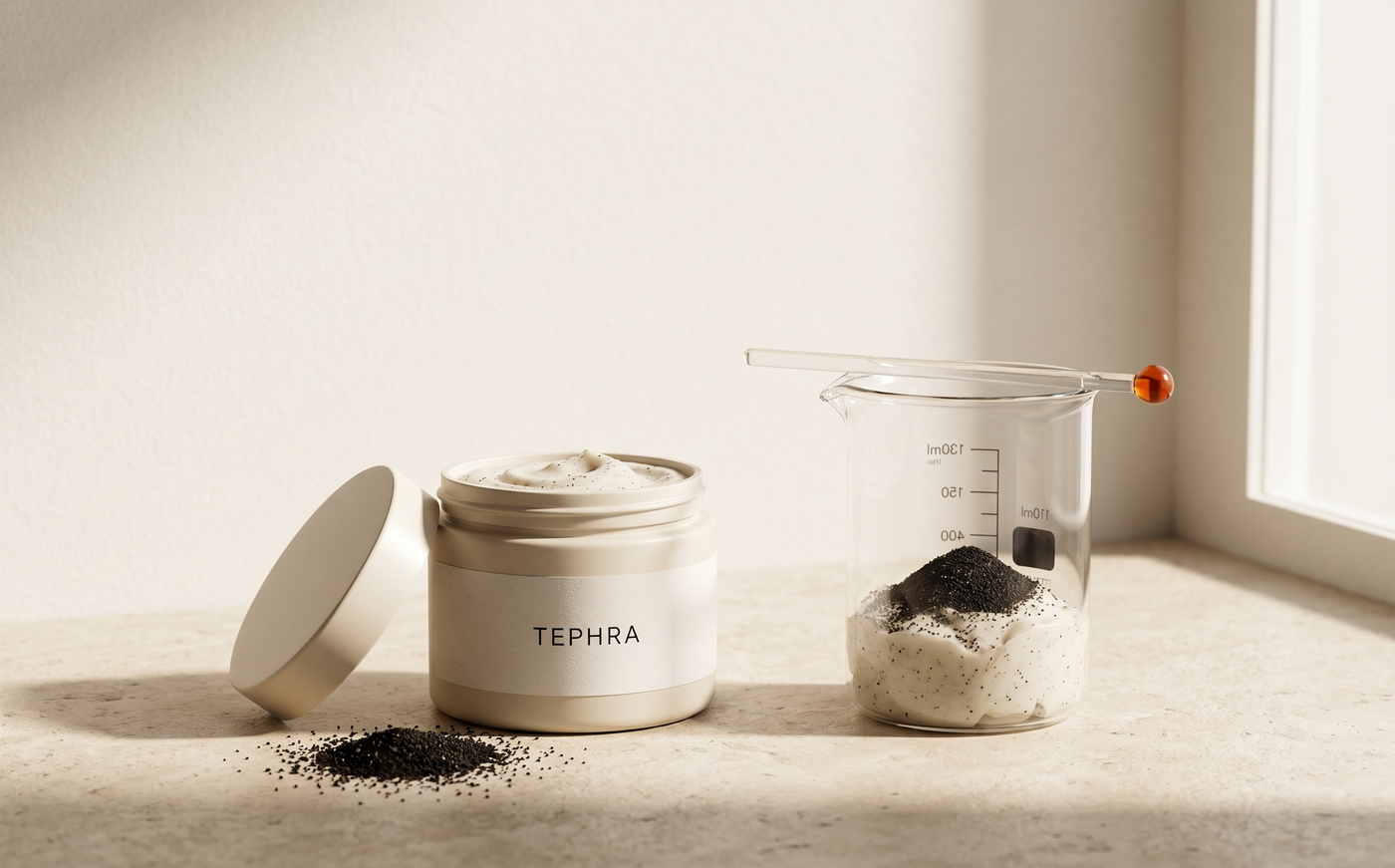
Volcanic sand sounds like marketing. A black, mineral-rich grit, scooped from a beach in Iceland and folded into a face scrub. It is easy to assume the word is doing more work than the ingredient. So here is what volcanic sand actually is, what it does on your skin, and where the claims tend to outrun the chemistry.
What volcanic sand is
Iceland's black sand is what is left when lava meets cold water and shatters. It is mostly basalt, a hard volcanic rock made of minerals like feldspar, pyroxene and olivine, with some volcanic glass mixed in. Worn down by the sea, then milled finer for skincare, it becomes a fine, dark grit.
The word that matters is inert. Basalt does not dissolve in water, it does not react with your skin, and it does not break down into anything your body absorbs. It is a hard, stable mineral. That is exactly why it works as an exfoliant, and also why some of the claims made about it fall apart.
What it does
A physical exfoliant clears dead cells from the surface of your skin by friction. You massage the grit over your skin, the particles catch on the loose, flaky cells sitting on top, and those cells come away. Volcanic sand is good at this for two plain reasons. It is hard, so it does not crumble before it has done anything. And it can be milled into fine, fairly even grains, so it lifts the surface without dragging at it.
That is the whole job. Once the dull layer on top is cleared, skin feels smoother straight away and looks a little brighter, because an even surface reflects light more evenly than a rough one.
What it does not do
This is where the marketing stretches. Volcanic sand is often sold as mineral-rich, with the hint that those minerals feed or nourish your skin. They do not. The minerals in basalt are locked inside a hard, insoluble rock. They sit on the surface, do their mechanical job, and rinse away. Nothing is delivered into the skin. A scrub is not a serum.
It will not detoxify anything either. Your skin is not a filter holding toxins for a scrub to pull out. Clearing dead cells is useful and visible, but it is housekeeping, not a cleanse in the medical sense.
The source also matters less than the label implies. Skin cannot tell whether a hard, fine grit came from an Icelandic beach, a sugar field or a factory. What matters is the particle: how hard it is, how fine, and how evenly shaped. A jagged grit scratches. A fine, rounded one polishes. Volcanic sand happens to be a good raw material for the gentle end of that range, which is the honest reason to use it, rather than anything mystical about where it came from.
So, is it good for skin?
As a physical exfoliant, yes, used sensibly. It is hard enough to work, fine enough to be kind, and it sits well in a creamy base with a small amount of acid that loosens the bonds between dead cells so the grit has less to do. Used two or three times a week with light pressure, it does a real, visible job.
What it is not is a miracle, a delivery system or a detox. It is a good, honest exfoliant with a good story behind it. The story is true. It is just a story about geology, not about your skin drinking in the earth.
This article is general information about skincare ingredients, not medical advice. If you have a skin condition or a specific concern, speak to a pharmacist, GP or dermatologist.
See the scrub → Made with fine Icelandic volcanic sand and a measured dose of acid.