Exfoliation is one of those words that gets used a lot and explained almost never. So before we sell you a scrub, here is what is actually happening on your skin, why it can look dull in the first place, and what the two main types of exfoliation are really doing.
Your skin already exfoliates itself
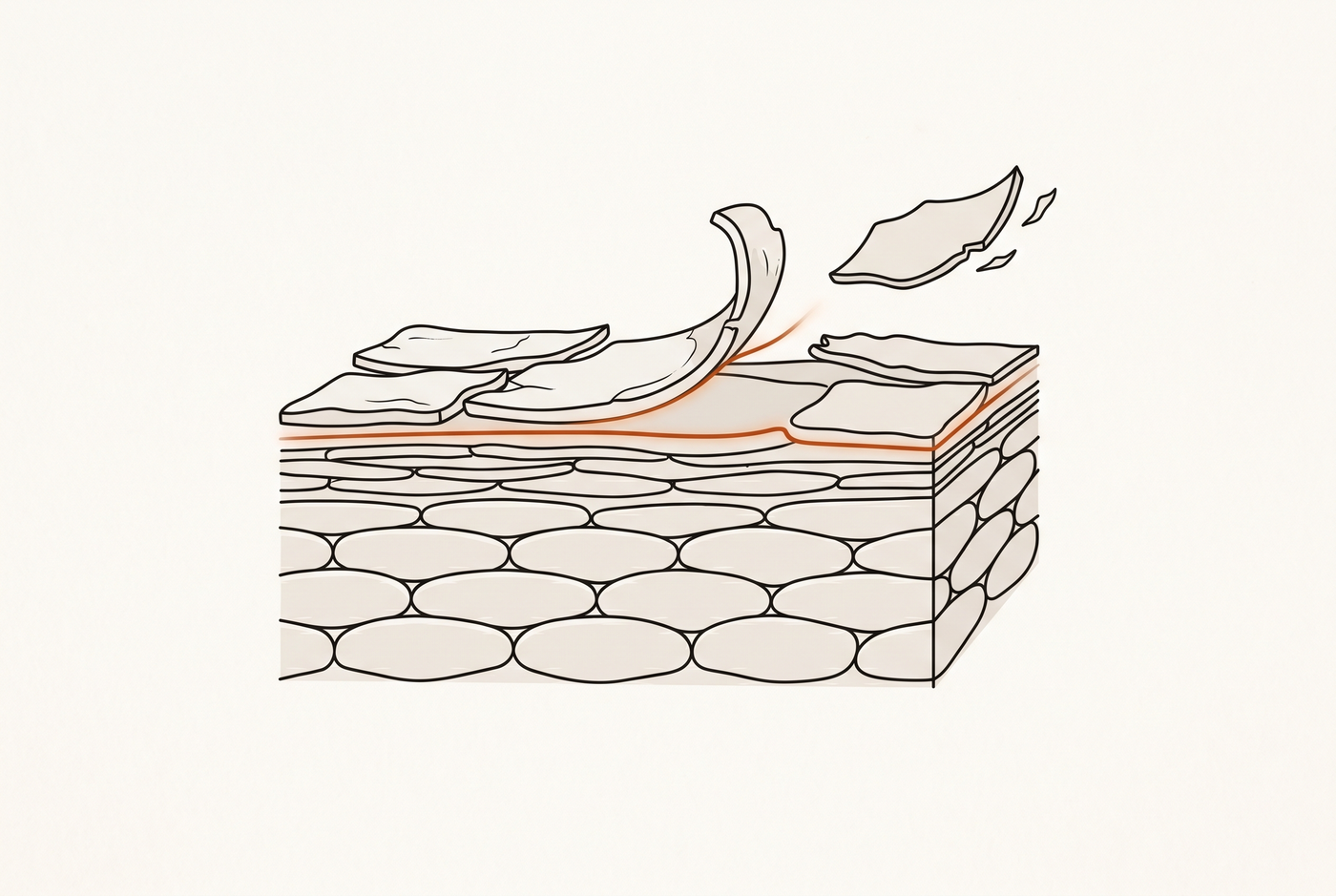
The outermost layer of your skin is called the stratum corneum. It is made of flattened, dead cells called corneocytes, held together by lipids, a bit like bricks set in mortar. This layer is not waste. It is the barrier that keeps water in and irritants out, and it matters.
Your body sheds these dead cells and replaces them from below in a continuous cycle. In younger skin that turnover takes somewhere around a month, and you never notice it happening. The trouble is that the process slows down as you get older, and things like dry weather, sun damage and a sluggish barrier can leave more dead cells clinging to the surface than your skin would ideally keep.
That build-up is what you are seeing and feeling when skin looks a bit flat and feels rough or papery. The skin underneath is fine. It is the layer on top that has outstayed its welcome.
A scrub does not create new skin. It clears the old surface so the skin you already have can show.
What exfoliation is for
Exfoliation just means helping that surface layer along a little faster than it would manage by itself. Done sensibly, the payoff is straightforward and worth being honest about:
- Smoother texture. Take off the rough surface cells and skin genuinely feels softer right after you rinse.
- A brighter look. A layer of dead, uneven cells scatters light, which reads as dull. Clearing it lets the fresher surface reflect light more evenly.
- Better absorption. Whatever you apply next, a serum or a moisturiser, spreads and sinks in more evenly when it is not sitting on a layer of debris.
Notice what is not on that list. Exfoliation will not shrink pores permanently, will not "detox" anything, and will not fix a skin condition. Anyone promising that is selling you a story.
The two ways to do it
There are two broad approaches, and they work by completely different mechanisms. Most well-made scrubs, including ours, use both because they complement each other.
Physical exfoliation
This is the one everyone pictures: small hard particles that you rub over the skin to dislodge dead cells by friction. The exfoliant might be sugar, salt, ground seeds or, in our case, fine volcanic sand. Volcanic sand is an inert mineral grit, which is to say it is hard, it does not dissolve, and it does its job purely by touch.
The thing that separates a good physical exfoliant from a harsh one is the particle. Large, jagged grains (the old apricot-kernel scrubs are the classic example) can cause tiny tears in the surface. Finely milled, more rounded grains lift away dead cells without that damage. The way you use it matters just as much: light pressure and a short massage, not a vigorous scrub.
Chemical exfoliation
This sounds more dramatic than it is. Chemical exfoliants are usually mild acids that loosen the glue between dead cells rather than scraping the cells off. The most common are the alpha hydroxy acids, or AHAs, a group that includes glycolic acid and lactic acid.
AHAs are water soluble and work mainly on the surface. They reduce the adhesion between corneocytes in the upper part of the stratum corneum, so those dead cells let go and shed more readily. Glycolic acid is the smallest molecule in the group, which is why it is known for penetrating well. Lactic acid is a little larger and tends to be gentler, with the bonus that it also helps hold water in the skin.
The acid loosens the bonds holding dead cells in place while the volcanic sand sweeps away what has been loosened. Pairing them means each can work at a lower intensity than it would need to on its own, which is gentler on your skin than leaning hard on either one. This combination, mineral grit plus exfoliating acid, is the same approach used in well-reviewed scrubs from larger brands, so it is well tested rather than experimental.
The catch worth knowing about
Exfoliating acids have one important side effect: they make your skin more sensitive to the sun. UK and other regulators specifically advise that products with AHAs carry guidance to use sun protection, because the effect can persist for about a week after you stop using the product. None of this is alarming. It just means a daily sunscreen, which is good practice anyway.
The other common mistake is doing too much. Over-exfoliating, whether by scrubbing too hard, too often, or layering several acid products at once, can wear down that barrier you are meant to be protecting. The signs are tightness, redness, stinging and skin that suddenly reacts to products it used to tolerate. If that happens, the fix is to stop exfoliating entirely for a week or two and let the barrier recover.
For most people, once or twice a week is the sweet spot. That is enough to keep the surface clear without picking a fight with your skin.
The short version
Your skin sheds its own dead surface cells, but that slows over time and leaves a dull, rough layer behind. A scrub clears it, which makes skin feel smoother, look brighter and take the rest of your routine better. Physical exfoliants lift cells off by friction, chemical exfoliants loosen the bonds between them, and using both gently is kinder than overusing either. Wear sunscreen, do not overdo it, and the rest takes care of itself.
This article is general information about how exfoliation works, not medical or skin-diagnostic advice. If you have a skin condition or a specific concern, speak to a pharmacist, GP or dermatologist.
See the scrub → Made with fine Icelandic volcanic sand and a measured dose of acid.